Know When to Walk Away: Reading the Signals That Say Your Session Is Over
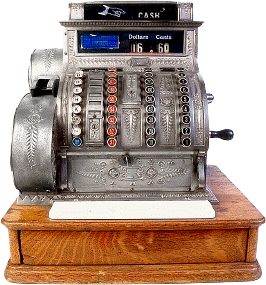
Photo: Unknown authorUnknown author, Public domain, via Wikimedia Commons
There's a moment in almost every solid gaming session where things feel invincible. The spins are landing right, the balance is climbing, and that little voice in your head is whispering just a few more. Here at Spin123, we're all about the thrill — but we also know that the difference between a winning night and a frustrating one often comes down to a single skill: knowing when to stop.
This isn't about being timid. It's about being smart. The players who consistently walk away ahead aren't the luckiest ones in the room — they're the most self-aware.
The Math That Doesn't Care About Your Feelings
Let's start with something cold and honest: variance. In any spinning game, variance describes the natural swings between winning and losing outcomes. A hot streak isn't a sign that the machine likes you — it's just the positive end of a statistical range. And variance, by definition, swings both ways.
Here's what trips most players up: after a big win, the temptation is to keep going because it feels like momentum. But mathematically, the game has no memory. Each spin is independent. The reels don't owe you another jackpot just because they delivered one five minutes ago.
Understanding variance means accepting that your best exit point is often right in the middle of what feels like a hot run — not after it's already cooled off.
Five Behavioral Red Flags to Watch For
Psychologists who study gambling behavior have identified a cluster of warning signs that show up when a player is approaching the danger zone. None of these are moral failures — they're just human. But recognizing them in yourself is a serious edge.
1. Chasing the Peak You hit a high point — maybe your balance doubled — and instead of locking that in, you kept playing to try to beat your own record. This is one of the most common patterns. The benchmark keeps moving, and suddenly you're playing against your own previous win instead of playing for your original goal.
2. Session Creep You told yourself 30 minutes. It's been 90. Time distortion is real in spinning games — the rhythm of the reels creates a kind of flow state that makes it genuinely hard to track how long you've been at it. If you've blown past your intended time without noticing, that's a signal.
3. Bet Escalation When players start losing, a very common response is to increase bet sizes to "make it back faster." This feels logical in the moment but it's actually the fastest way to accelerate losses. If you catch yourself bumping up your wager out of frustration rather than strategy, stop and reset.
4. Emotional Narrating If you're talking to the screen — muttering about bad luck, bargaining for one good spin, feeling genuinely angry at a slot machine — your emotional brain has taken over from your rational one. That's not a great state to be making financial decisions in.
5. The "Almost" Trap Near-misses are a well-documented psychological phenomenon. When two jackpot symbols land and the third just misses, your brain registers that as almost winning rather than losing. It's not. A miss is a miss. If near-misses are keeping you at the screen, your perception of probability has gotten fuzzy.
Building Your Exit Rules Before You Start
The most effective cash-out strategy is one you build before you're emotionally invested in a session. Think of it like setting a GPS route before you start driving — much easier than trying to navigate while you're already on the highway.
Here's a simple framework to try:
Set a win ceiling. Decide in advance what profit level triggers a mandatory stop or at minimum a pause. A lot of experienced players use 50% — if they double up halfway, they lock in a portion and only play with the rest.
Set a loss floor. This one's non-negotiable. Pick a number you're genuinely comfortable losing before you ever spin the first reel, and treat it like a hard wall. Not a suggestion — a wall.
Use a time alarm. Literally set a phone alarm. When it goes off, take a two-minute break and reassess with fresh eyes. You'd be surprised how different your session looks after even a short pause.
Write it down. It sounds old-school, but jotting your session goals on a sticky note or in your phone before you start creates a kind of accountability. It's harder to ignore a rule you've already committed to in writing.
The Psychology of "Just One More"
Spin123 published a piece a while back on the science behind that one more try feeling, and the core insight is worth revisiting here: your brain is wired to chase variable rewards. Slot-style games are particularly good at triggering this loop because the reward schedule is unpredictable — and unpredictable rewards are, neurologically speaking, more compelling than guaranteed ones.
Knowing this doesn't make you immune to it. But it does give you a framework to recognize the feeling for what it is: a cognitive pattern, not a reliable signal that the next spin will be different.
When you feel that pull, pause and ask yourself: Am I making a strategic decision right now, or am I just responding to a feeling? If you can't answer that honestly, that's probably your answer.
Protecting the Win Is Part of the Win
There's a reason the phrase "scared money" exists in gaming culture. Players who are terrified of losing can't play effectively — they're too reactive. But there's an opposite failure mode that doesn't get talked about as much: players who are so caught up in the excitement of winning that they can't protect what they've earned.
At Spin123, we want you to enjoy every session — and that means leaving with something to show for the good ones. The reels will always be there tomorrow. Your winning balance from tonight doesn't have to be.
The best players aren't the ones who never stop. They're the ones who stop at the right time.