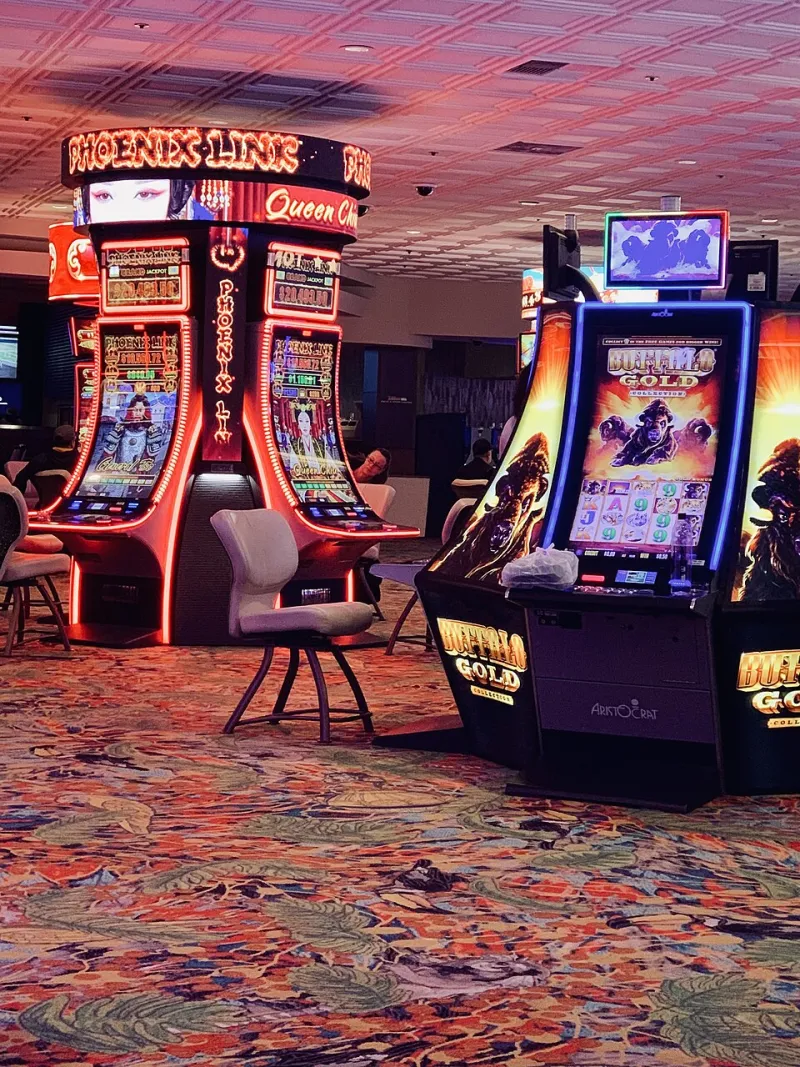
Why You Can't Stop Spinning: The Fascinating Science Behind That 'One More Try' Feeling
Photo: brain neuroscience glowing slot machine reels casino psychology, via image.slidesharecdn.com
You've been there. The reels slow down, two matching symbols line up, and then — just barely — the third one drifts past. Your heart jumps. Your finger hovers over the button again almost before you've registered what happened. Sound familiar?
That moment isn't an accident. It's the product of decades of behavioral research, neuroscience, and design psychology all converging in one glowing, spinning interface. At Spin123, we think the most empowered players are informed ones — so let's pull back the curtain and look at what's actually happening inside your head every time you take a spin.
Your Brain on Anticipation: The Dopamine Loop
Here's the thing most people don't realize: dopamine — the brain chemical most associated with pleasure — doesn't actually spike when you win. It spikes in the moments before a potential reward. Neuroscientists call this the anticipatory dopamine response, and it's one of the most powerful motivational forces in human biology.
When those reels start spinning, your brain essentially enters a state of excited uncertainty. Dr. Reza Habib, a neuroscientist at Southern Illinois University, has studied how gambling-related imagery activates the brain's reward circuitry even in people who don't gamble regularly. The mere possibility of a reward is enough to get those neural pathways firing.
This is why the spin itself — that few seconds of motion and suspense — feels so compelling. Your brain isn't waiting for the outcome. It's already celebrating the chance of one.
The Near-Miss Effect: When Losing Feels Like Almost Winning
One of the most counterintuitive findings in gaming psychology is the near-miss effect. Logically, a near-miss is still a loss. You didn't win. Nothing changed. But research consistently shows that near-misses increase motivation to keep playing — sometimes even more than actual wins do.
A landmark study published in the journal Neuropsychologia found that near-misses activate the same reward-related brain regions as genuine wins. Your brain, in other words, partially processes "almost" as "yes." This creates a feedback loop where losses dressed up as near-victories can feel encouraging rather than discouraging.
In spinning games, this plays out visually. When two jackpot symbols land and the third stops just one position off, that's not random bad luck — the mathematics of modern slot design deliberately create these moments at a higher frequency than pure chance would produce. It's not manipulation in a sinister sense, but it is intentional design, and knowing about it gives you a different perspective on that gut-punch near-miss feeling.
Variable Rewards: The Slot Machine and the Slot in Your Pocket
B.F. Skinner, the famous American behaviorist, figured out something in the 1950s that would later define an entire entertainment industry: variable ratio reinforcement schedules are the most powerful way to sustain behavior. In plain English, rewards that come unpredictably — sometimes after one try, sometimes after fifty — are far more compelling than rewards that come on a fixed schedule.
This is the same psychological principle behind social media notifications, and yes, behind every spin you take. When you don't know which spin will pay out, every single spin carries equal potential. You can't rationally decide "this one won't work" because you genuinely don't know. That uncertainty isn't a bug in the system — it's the whole engine.
Gaming psychologist Dr. Mark Griffiths of Nottingham Trent University has written extensively about how variable reward structures in digital games can create habitual engagement patterns that players don't always consciously recognize. The key insight: the behavior gets reinforced by the schedule of rewards, not just the rewards themselves.
The Illusion of Control: Why We Tap the Button Just So
Here's a quirky one. Studies show that many players develop personal rituals around spinning — pressing the button at a specific rhythm, waiting a certain number of seconds between spins, or believing that switching games after a cold streak improves their luck. Rationally, none of this affects outcomes in games governed by certified random number generators (RNGs). But psychologically, these rituals serve a real purpose.
Researchers call this the illusion of control — the tendency for people to believe they have influence over chance-based outcomes. It reduces anxiety and increases engagement. In a world where so much feels unpredictable, the act of pressing a button and feeling like your timing matters is oddly comforting.
Understanding this doesn't make the rituals silly. It makes them human. But it does highlight why it's worth checking in with yourself: are you playing because it's fun, or because the ritual has started to feel like necessity?
The Excitement Architecture of Modern Spinning Games
Modern online spinning games aren't just digital versions of old mechanical slots. They're carefully engineered entertainment experiences. Sound design, visual feedback, win celebrations, and even the speed of the reels are all calibrated to maximize engagement. Wins — even small ones that don't cover the cost of the spin — are often accompanied by lights, sounds, and animations that feel celebratory.
This is sometimes called "losses disguised as wins" (LDWs) in research literature. You bet a dollar, win thirty cents, and the machine plays a triumphant jingle. Technically, you lost seventy cents. But your emotional experience was of winning. These design choices aren't illegal, but being aware of them helps you evaluate your session more accurately.
Playing Smart: What This All Means for You
None of this psychology makes spinning games bad. Entertainment is entertainment, and there's genuine fun to be found in the thrill of a spin. But the science suggests a few practical takeaways for anyone who plays:
- Set a budget before you start. Your dopamine-charged brain mid-session is not the best financial advisor.
- Recognize the near-miss for what it is — a loss, not a sign that a win is coming.
- Take breaks. The anticipatory excitement your brain generates during play is real, and stepping away resets that loop.
- Play for entertainment value, not as a strategy. The house edge is real, and no ritual changes it.
At Spin123, we want every spin to be something you enjoy on your own terms. Understanding the science behind the excitement doesn't take the fun out of it — it puts you back in the driver's seat. And that's the best position to be spinning from.
If you ever feel like your playing habits are becoming difficult to manage, resources like the National Problem Gambling Helpline (1-800-522-4700) are available 24/7.