From Solo Spins to Squad Goals: How Spin123's Community Features Are Rewriting the Rules of Online Play
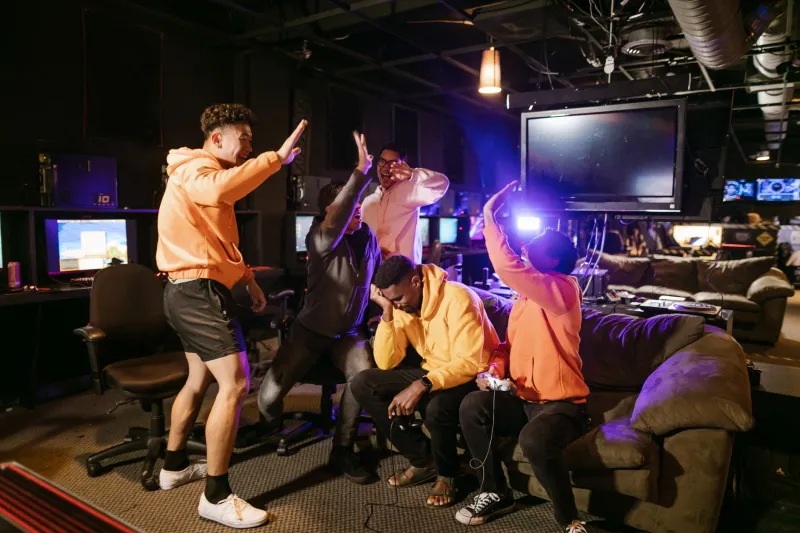
There's a reason people don't just watch sports alone in a dark room. Competition is better shared. The high-five after a big play, the trash talk between friends, the collective groan when things go sideways — those social layers are what transform a game into an experience. For years, online spinning platforms didn't really offer that. You logged in, you spun, you logged out. Fun, sure. But kind of lonely.
Spin123 is changing that equation in ways that are genuinely reshaping how players think about their sessions. Multiplayer tournaments, friend challenge modes, and real-time social leaderboards have quietly evolved the platform from a solo pastime into something closer to a community sport. And players are noticing.
Why Solo Gaming Gets Old (Even When You're Winning)
Here's something the gaming psychology research consistently shows: wins feel bigger when someone else witnesses them. It's not vanity — it's neuroscience. Shared experiences amplify emotional responses, which is why casinos have always been noisy, crowded, social places. The ambient buzz of other players is part of the product.
Online platforms historically stripped all of that away in exchange for convenience. You got access from your couch in Cleveland or your apartment in Austin, but you gave up the social electricity that makes gambling feel like an event rather than a transaction.
Players who've been spinning for a while tend to hit a wall with purely solo play. Marcus T., a Spin123 regular from Nashville, described it this way: "I'd have these incredible runs — like, genuinely unbelievable streaks — and I'd just sit there by myself. There was nobody to even tell. It felt a little hollow after a while."
That feeling is more common than most platforms acknowledge. And it's exactly the gap that community features were designed to fill.
Tournaments: When Friendly Pressure Becomes a Feature, Not a Bug
Spin123's multiplayer tournament structure is probably the platform's most talked-about social element, and it works because it taps into something deeply human: we perform better when people are watching.
Tournaments at Spin123 aren't just about who walks away with the biggest prize pool. They create a shared narrative arc — a beginning, a middle, and an end that players experience together. There are momentum swings, unexpected leaders, and the kind of dramatic reversals that make for actual stories worth telling.
Jessica R., a player based in Phoenix who's competed in several Spin123 tournaments, put it bluntly: "I play differently in a tournament. I'm more focused. It's not that I'm reckless the rest of the time, but there's an edge to tournament play that solo sessions just don't have. I like that version of myself."
That heightened focus is actually a well-documented psychological phenomenon. When we're accountable to others — even in a low-stakes, fun context — we tend to make more deliberate decisions. For spinning games, that often translates to better bankroll discipline and more thoughtful session management. The social pressure, counterintuitively, can reinforce responsible play habits.
Friend Challenges: The Trash Talk Economy
If tournaments are the main event, friend challenges are the ongoing season that keeps the competitive energy alive between big matches. The ability to directly challenge someone in your network — a coworker, a college friend, a sibling you've been trying to beat at everything since 1998 — adds a layer of personal stakes that no leaderboard can fully replicate.
The trash talk economy that develops around these challenges is, frankly, delightful. Players report that friend challenges have become a running thread in group chats, with screenshots shared, results debated, and rematches demanded with genuine enthusiasm.
"My buddy Derek and I have this ongoing thing," said Ryan M., a Spin123 player from Chicago. "Every week, one of us sends a challenge. It's become this whole ritual. We've got a running tally going back months. At this point, it's less about the spins and more about not letting him win."
That kind of sustained engagement is remarkable in any entertainment context. The personal relationship adds stakes that pure chance-based games traditionally struggle to manufacture. When the outcome matters because your friend is watching, the experience transforms entirely.
Social Leaderboards: Visibility as Motivation
Leaderboards are nothing new in gaming — they've been around since the arcade era. But Spin123's social leaderboard design does something smarter than just ranking players by score. It creates visibility into how people are playing, not just how well.
Seeing that a friend had a massive session yesterday, or that someone in your network is on a hot streak, creates a kind of ambient competitive awareness that keeps players engaged even when they're not actively spinning. It's the gaming equivalent of checking your buddy's fantasy football score — you're invested in the story even when you're not playing.
For newer players especially, social leaderboards serve as a learning tool. Watching how more experienced spinners approach their sessions, observing their patterns and rhythms, provides informal mentorship that no tutorial could replicate.
Keeping It Fun: Community Features and Responsible Play
It's worth addressing the elephant in the room: does social competition push players toward riskier behavior? It's a fair question, and the short answer is — not when the features are designed thoughtfully.
Spin123's community tools are built around shared enjoyment rather than pressure to escalate. Tournament entry is structured with clear limits. Friend challenges operate within the same responsible play framework as solo sessions. The leaderboards celebrate consistency and smart play, not just big swings.
The players we spoke with largely confirmed that social features had actually improved their discipline. When you're playing against friends, your reputation is on the line — and most people don't want to be known as the person who blew their budget chasing a comeback. There's social accountability baked into the experience.
"I'm honestly more careful when I'm in a challenge," Jessica R. noted. "I don't want to make a dumb move and hand Derek the win. So I think more. I stick to my plan."
The Bigger Picture: Gaming as a Social Sport
What Spin123 is building — intentionally or not — is a model for what online spinning can become when it stops treating players as isolated users and starts treating them as members of a community. The platform's social layer doesn't change the fundamental nature of the games. The reels still spin the same way. The odds are what they are. But the meaning of each session shifts when other people are part of the story.
For players who've always loved spinning but felt like something was missing, these features fill a real gap. And for newer players trying to find their footing, the community provides context, camaraderie, and — yes — a little friendly competition to keep things interesting.
Marcus from Nashville summed it up as well as anyone: "I used to play to win. Now I play to play with people. The winning is still great, but it's not the whole point anymore."
That's a pretty good place to be.