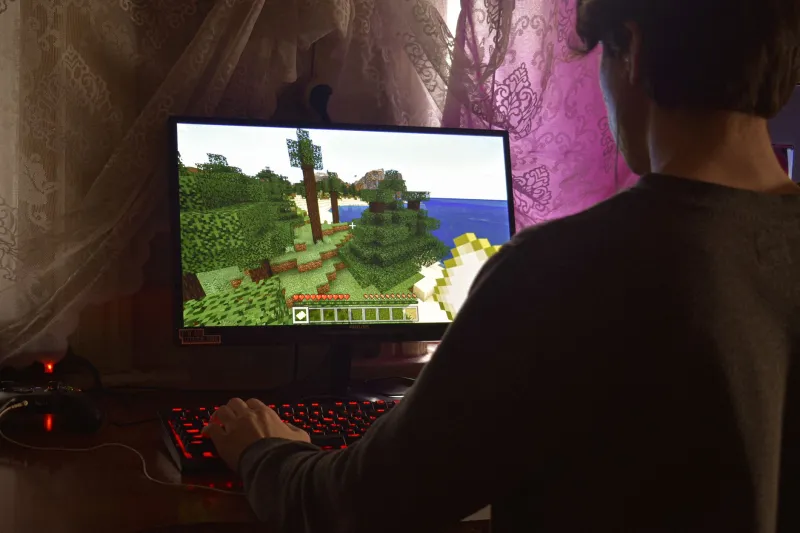
Morning Spinner or Night Owl? What the Clock Actually Does to Your Game at Spin123
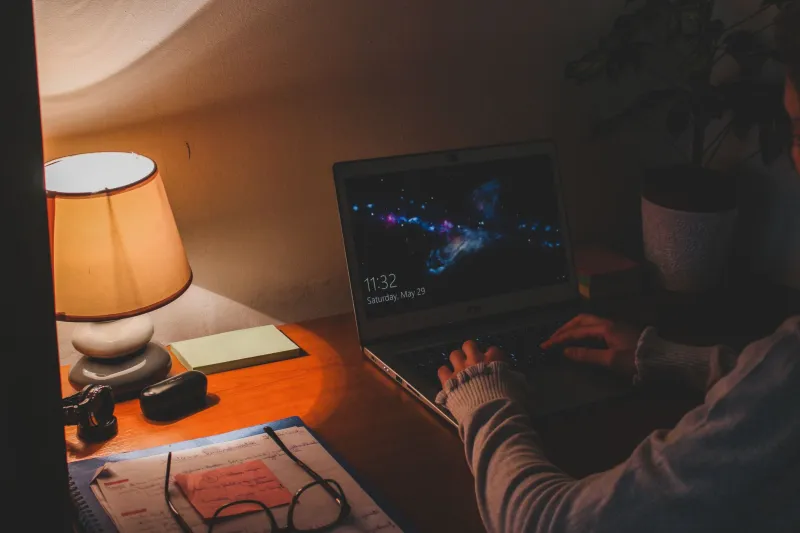
Ask any regular Spin123 player when their best sessions happen, and you'll get wildly different answers. Some swear by that quiet window right after their morning coffee, when the house is still and their head is clear. Others insist the real magic kicks in somewhere around midnight, when the day's noise has finally faded and it's just them, the glow of the screen, and the spin button.
But here's the thing: both groups are probably right — just not for the reasons they think.
The truth behind when you play is a lot more interesting than lucky hours or hot streaks. It has to do with your biology, your brain chemistry, and a system your body's been running on since long before slot machines existed.
Your Brain Has a Schedule (Whether You Like It or Not)
Circadian rhythms aren't just about when you feel sleepy. They govern a surprisingly wide range of cognitive functions — attention span, risk tolerance, impulse control, emotional regulation. All of which, as it turns out, are pretty central to how you perform during a gaming session.
Dr. Sara Mednick, a cognitive neuroscientist at UC Irvine who studies sleep and performance, has described the human brain's daily cycle as a kind of rolling tide. Alertness and executive function — your brain's ability to plan, evaluate, and make deliberate choices — peak differently depending on your chronotype. Morning people (sometimes called "larks") tend to hit their cognitive high point in the late morning. Night owls often don't reach peak mental sharpness until early evening or later.
For players at Spin123, this isn't just trivia. It's actually operational information.
What Early Sessions Look Like in the Data
When we looked at aggregated, anonymized session behavior on Spin123 across different times of day, some patterns started to emerge that aligned surprisingly well with what sleep science would predict.
Morning players — those logging in between roughly 7 and 11 a.m. — tended to show more consistent session behavior. They were more likely to set a budget and stick closer to it. They took slightly longer between spins on average, suggesting more deliberate play. And they were less likely to chase losses aggressively after a cold streak.
None of that means morning players win more. The math of the games themselves doesn't change based on the time on your microwave clock. But the way those players engaged with the games was measurably different — and for a lot of people, more measured play means a more enjoyable experience overall.
The Midnight Session: Myth vs. Reality
Here's where it gets a little complicated, because late-night play is not a monolith.
There's a version of the midnight session that's actually fine — maybe even great. If you're a genuine night owl whose cognitive peak naturally falls in the evening, playing at 11 p.m. might represent your sharpest, most focused state. Your decision-making is on point, your patience is intact, and you're fully present for every spin.
But there's another version of the late-night session that sleep researchers would flag immediately: the fatigued session. This is the one that starts after a full workday, a couple of hours of TV, and the kind of low-grade exhaustion that doesn't feel dramatic but is quietly eroding your judgment.
Fatigue has a sneaky relationship with risk. Studies published in journals like Sleep and Nature have shown that sleep-deprived individuals tend to underestimate risk while simultaneously overestimating their own performance. Translation: you feel like you're playing well when you're actually making sloppier calls. You're more likely to extend a session past your intended stopping point. You're more susceptible to the "just one more spin" pull that we've explored in other pieces here on Spin123.
The data from late-night Spin123 sessions reflects this split. Sessions that started after 10 p.m. showed higher variance in session length — some players wrapped up quickly and efficiently, while others ran significantly longer than their daytime averages. The extended sessions clustered heavily in the 12 a.m. to 3 a.m. window, which aligns with what researchers call the "second wind" trap: a brief spike in subjective energy that masks underlying fatigue.
The 'Lucky Hours' Question Gets a Straight Answer
Let's address this one directly, because it comes up constantly in player communities and Discord servers: are there actually lucky hours on Spin123?
No. The games themselves operate on certified random number generators that don't know what time it is. There is no algorithmic preference for 2 a.m. spins or 9 a.m. spins. The RNG is, by design, completely indifferent to your schedule.
What does vary by time of day is you — your reaction time, your emotional state, your willingness to walk away, and your ability to make clear-headed decisions about how long to keep playing. The perception of lucky hours is almost certainly a cognitive artifact: players in a good mental state have more satisfying sessions, and those sessions happen to cluster around times when they're naturally more alert.
In other words, the hour isn't lucky. You're just sharper at certain times, and sharper play tends to feel better.
So When Should You Actually Spin?
The honest answer is: during your personal cognitive peak, whatever time that happens to be.
If you're not sure when that is, start paying attention to a few things. When during the day do you feel most focused during non-gaming tasks — reading, working, having a complex conversation? That window is probably close to your sweet spot for gaming too.
A few practical guidelines worth considering:
Don't play exhausted. This sounds obvious, but fatigue is sneaky. If you've been yawning for an hour and you're still spinning, your brain is not your ally right now.
Morning sessions work well for budget discipline. If you tend to struggle with sticking to your session limits, try shifting some play to earlier in the day when your executive function is at its strongest.
Night owls: own your chronotype. If you genuinely feel sharper at 10 p.m. than at 10 a.m., there's nothing wrong with building your Spin123 sessions around that. Just be honest with yourself about whether you're sharp — or just awake.
Use the quiet as a tool, not a trap. A lot of late-night players cite the lack of distraction as a reason they prefer those hours. That's legitimate. Just make sure the quiet is helping you focus, not lulling you into a longer session than you intended.
The Bigger Picture
There's something kind of fascinating about the fact that one of the most significant variables in your gaming experience isn't the game itself — it's the biological rhythm you've been running on your whole life. Spin123's games are designed to be entertaining at any hour, but the player sitting in front of them is a different version of themselves depending on when they show up.
Understanding that isn't about finding a hack or gaming the system. It's about playing with self-awareness — knowing when you're at your best and giving yourself the best chance to enjoy the experience the way it's meant to be enjoyed.
The clock isn't lucky or unlucky. But it is telling you something. It might be worth listening.